Wednesday, September 29, 2010

2010 KIA Forte Koup SX

2010 KIA Forte Koup SX

2010 KIA Forte Koup SX

2010 KIA Forte Koup SX2010 KIA Forte Koup SX2010 KIA Forte Koup SX2010 KIA Forte Koup SX2010 KIA Forte Koup SX

land rover discovery cars


Most recent Land Rover Discovery

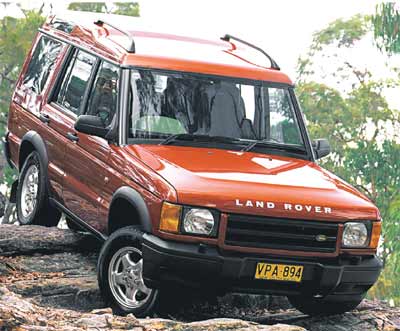
The Land Rover Discovery was a two-generation vehicle, and its most recent generation was built from 1999 until the SUV's demise in 2004. (The Land Rover LR3 took its place in the lineup.) Between model years 2000 and 2002, the Discovery was known as the Discovery Series II.

This generation saw a dizzying flurry of trim changes. In 1999, the Discovery was available in two versions: the outgoing generation called the SD and the new Series II. In 2000, the old one was dropped. Model-year 2001 saw another revision; the Discovery Series II could be had in SD, LE and SE models. The LE trim level was dropped in 2002. In 2003, the SUV once again became known simply as the Discovery, and from that point on it was available in base S, SE and top-of-the-line HSE trim levels.

Base-model Discovery models from this generation weren't light on luxury features, offering standard amenities like a CD player, power-adjustable front seats and dual-zone climate control. The nimble Land Rover was also ready to roam the great outdoors, thanks to permanent four-wheel drive, plenty of ground clearance and Hill Descent Control. Active Cornering Enhancement, a hydraulic suspension system that reduces vehicle body lean during cornering, was available, as were a self-leveling rear suspension and third-row seats.

Initially, two 4.0-liter V8s were available, one good for 182 horsepower and 233 pound-feet of torque, and the other for 188 hp and 250 lb-ft of torque. In 2000, the less-muscular V8 was dropped from the lineup. Model-year 2003 saw the introduction of a more potent 4.6-liter V8 good for 217 hp and 300 lb-ft of torque. This engine was used to power all Discoverys until the model's retirement. This Land Rover wasn't known for stellar fuel economy. Discoverys powered by the 4.6-liter got a paltry 12 mpg in the city and 16 in highway travel.

Engine changes weren't the only ones experienced by the Land Rover Discovery during these five years. In 2000, the SUV benefited from minor interior upgrades. In 2002, new alloys were added, along with a standard Harman Kardon sound system. The Discovery got revised styling and interior treatments for 2003, and improvements were also made to its steering, brakes and suspension. By 2004, the options list had grown to include a navigation system, rear-seat DVD entertainment system and rear parking sensors.

Top-notch interior materials were the order of the day in the Discovery's cabin. There was ample head- and legroom, but the SUV's narrow proportions resulted in scarce shoulder- and hiproom. Additionally, this Land Rover's cramped doorways and tall stance made entry and exit somewhat of a challenge.

In editorial reviews, the Land Rover Discovery scored high marks for its off-road performance. On pavement, it was plagued by sluggish steering and an overly harsh ride. Ride quality saw some improvement after 2003's refresh, so opt for a 2003 or 2004 model to get a Discovery offering the most competence in this area. Finding a well-maintained and -documented model is probably wise given the Disco's less-than-exemplary reputation for reliability and durability.

Past Land Rover Discoverys

The Land Rover Discovery's first generation lasted from 1994-'99. Standard features included full power accessories, keyless entry and cruise control. A third-row seat and, eventually, a CD player were offered as options. Early Discoverys got their juice from a 3.9-liter V8 good for 182 hp and 232 lb-ft of torque. This engine was replaced by a 4.0-liter V8 in 1996, offering slightly more torque (233 lb-ft) and improved fuel economy. In 1997, the Discovery's interior was upgraded to include burled walnut trim.

Even more so than later models, Discoverys from this generation were prone to reliability issues; on-road ride quality was also quite unforgiving. Given these factors, we'd recommend that those in the used market place their money with one of the SUV's more amenable Japanese competitors. If you're determined to get a first-gen Discovery, opt for the 1996 and '97 versions, with their more frugal engines.

land rover discovery
land rover discovery cars
land rover discovery pictures
land rover discovery wallpaper
land rover discovery frontview
land rover discovery background
land rover discovery

Launched in 1989 the Land Rover Discovery was originally designed to bridge the gap between the utilitarian Defender and premium Range Rover models, offering a true off-road vehicle that could carry five people in comfort.

The Discovery or 'Disco' as some owners affectionately call them has been a phenomenal success in the 142 markets around the world in which it is sold and is just as common in the city as the farmyard. With over 50 years experience as the world's only dedicated 4x4 manufacturer Land Rover has achieved enviable brand loyalty with many owners choosing to purchase another Discovery or Land Rover model.

land rover discovery cars

Most recent Land Rover DiscoveryThe Land Rover Discovery was a two-generation vehicle, and its most recent generation was built from 1999 until the SUV's demise in 2004. (The Land Rover LR3 took its place in the lineup.) Between model years 2000 and 2002, the Discovery was known as the Discovery Series II.This generation saw a dizzying flurry of trim changes. In 1999, the Discovery was available

land rover lr4 wallpapers

land rover lr4
land rover lr4 wallpapers
land rover lr4 gallery
land rover lr4 pics
land rover lr4 pictures
land rover lr4 interior
land rover lr4 wallpaper
land rover lr4 image
land rover lr4
land rover lr4 showroom

land rover lr4 wallpapers

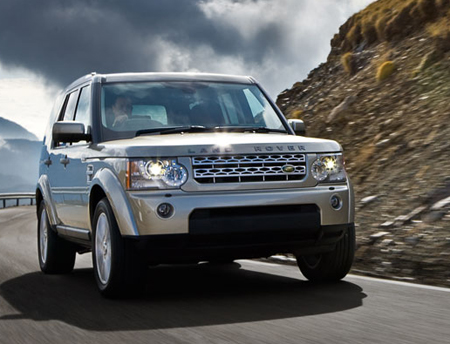
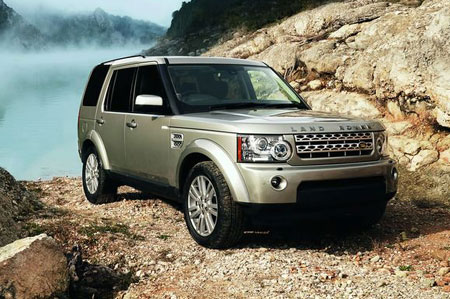
land rover lr4land rover lr4 wallpapersland rover lr4 galleryland rover lr4 picsland rover lr4 picturesland rover lr4 interiorland rover lr4 wallpaperland rover lr4 imageland rover lr4land rover lr4 showroom

Tuesday, September 28, 2010

Skoda Octavia Green E Line Concept


This year’s edition of the Paris show will see the VW Group’s successful Skoda brand unveiling its first-ever electric-powered vehicle called the Octavia Green E Line. Skoda says it is planning to create a special test fleet of Octavias Green E Line in 2011 with the goal of obtaining additional information relevant to the further development of the electric drive. The concept model is based on the series production Octavia Combi [estate] and is powered by an electric motor delivering a constant power of 60 kW / 80-hp and a maximum output of 85 kW / 114-hp.

The electricity for the Octavia Green E Line is supplied by a modern lithium-ion battery. With a range-per-charge of 140 kilometers (87 miles), the Skoda Octavia Green E Line comfortably meets the requirements of most everyday commuters in Europe. Located under the middle and rear parts of the floor and extending partly into the luggage compartment, the 26.5 kWh battery is made up of 180 lithium-ion cells (diameter 150 mm, length 650 mm) and weighs about 315 kilograms. However, the battery has almost no impact on the volume of the passenger and luggage compartments. The Octavia Green E Line is fitted with five comfortable seats, and its passenger compartment is identical with that of the Octavia Combi with a combustion engine.

The car is finished in a Pearl White exterior color and features chrome-trim on both the front and rear of the vehicle as well as on the wheels creating a contrast with the glossy black roof with integrated energy-generating photovoltaic panels.

Motivation is provided a 26.5 kWh lithium-ion battery which sends power to an electric motor that produces 85 kW (114 hp / 116 PS) and 270 Nm (199 lb-ft) of torque. This allows the wagon to accelerate from 0 to 100 km/h in 12 seconds, hit a top speed of 135 km/h (84 mph) and travel up to 140 km on a single charge.

Source: Skoda


Skoda Octavia Green E Line ConceptSkoda Octavia Green E Line ConceptSkoda Octavia Green E Line Concept Skoda Octavia Green E Line Concept Skoda Octavia Green E Line Concept Skoda Octavia Green E Line Concept


Press Release

OCTAVIA GREEN E LINE CONCEPT: ŠKODA'S FIRST-EVER ELECTRIC VEHICLE

  • Range: up to 140 km per charge thanks to modern ion-lithium battery
  • Engine: maximum power 85 kW
  • Test fleet to start in 2011

Mladá Boleslav, 29 September, 2010 - The 2010 Paris Motorshow will see the Octavia Green E Line concept. Škoda's first-ever electric-powered vehicle will demonstrate the company's innovative potential and technological competence in this growing area. The first fleet of test vehicles is planned for 2011.

Mobility for people and clean cars for the environment - these are Škoda's commitments. Mobility without emissions is the future. "The Octavia Green E Line embodies the values of the brand absolutely perfectly - the vehicle combines the desire for individual mobility with our environmental goals", said Škoda Auto BOD Chairman Prof. Dr. Winfried Vahland.

The Green E Line concept is based on the Škoda Octavia Combi. With its modular chassis design, this series-production car is the ideal option in terms of arranging the batteries, electronic control units and the electric engine with its constant power of 60 kW and max. power of 85 kW. Available right after the start (as is typical of this type of drive), the maximum torque of 270 Nm gives the car enough power for sharp acceleration and a good amount of agility and responsiveness, which the driver will appreciate mainly in busy city traffic. The Octavia Green E Line accelerates from 0 to 100 km/h in just twelve seconds, and the car's maximum speed is limited to 135 km/h.

The electricity for the Octavia Green E Line is supplied by a modern lithium-ion battery. With a range-per-charge of 140 kilometres, the Škoda Octavia Green E Line comfortably meets the requirements of most everyday commuters in Europe. Located under the middle and rear parts of the floor and extending partly into the luggage compartment, the 26.5 kWh battery is made up of 180 lithium-ion cells (diameter 150 mm, length 650 mm) and weighs about 315 kilograms. However, the battery has almost no impact on the volume of the passenger and luggage compartments. The Octavia Green E Line is fitted with five comfortable seats, and its passenger compartment is identical with that of the Octavia Combi with a combustion engine.

With smart dashboard indicators, the driver of the Octavia Green E Line always stays in control. The computer screen provides continuous information including instant output, power consumption, battery charge and the remaining range. The navigation display describes the energy flow, i.e., informs the driver that the electric engine is being supplied with electricity or, on the contrary, that it is generating electricity as the car decelerates or goes downhill.

The look of the Škoda Octavia Green E Line conveys the environmental-friendliness of its electric drive.Pearl-white exterior colour and elegant chrome-trim on both the front and rear of the vehicle as well as on the wheels create an impressive contrast with the glossy black roof with integrated energy-generating photovoltaic panels.

Škoda Auto is planning to create a test fleet of Octavias Green E Line in 2011 with the objective of obtaining additional information relevant to the further development of the electric drive.